Last updated 2026-07-24
TL;DR
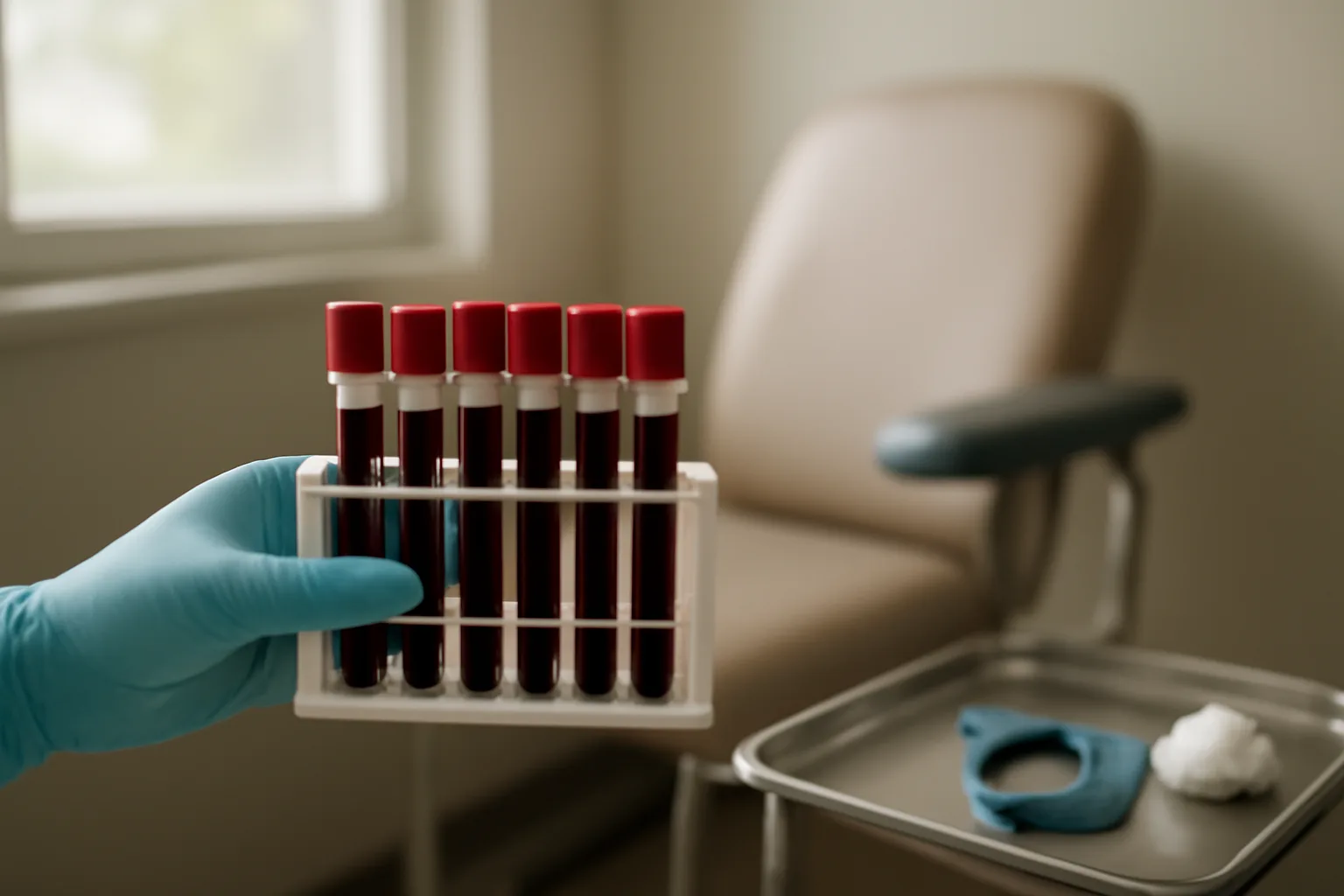
There's no official lab protocol for ipamorelin because it isn't an FDA-approved drug. Clinicians who use it as part of a tesamorelin/ipamorelin blend typically track IGF-1, fasting glucose or HbA1c, and a lipid panel at baseline and again after 6 to 12 weeks, since these reflect the downstream GH axis effects the peptide is meant to trigger.
Why isn't there a standard blood work protocol for ipamorelin?
Because ipamorelin has no FDA-approved indication, there's no package insert, no dosing label, and no mandated monitoring schedule the way there is for, say, insulin or levothyroxine. It reaches patients through compounding, most often as part of a tesamorelin/ipamorelin blend prepared by a licensed pharmacy, not as a standalone approved drug you'd find in the Drugs@FDA database [1]. That gap matters for blood work specifically. Compounded preparations fall under different rules than approved drugs; bulk substances used in 503A and 503B compounding are governed by the FDA's bulks lists under 21 CFR 216.23 and 216.24 [2] [3], and pharmacy compounding itself runs through 21 U.S.C. 353a [4]. None of that framework specifies a monitoring panel. So what clinicians actually order comes from extrapolating what the peptide does physiologically, not from a mandated checklist. Recent orthopaedic and sports medicine literature reviewing injectable peptide therapies makes the same point: monitoring practices are borrowed from general endocrine principles, not peptide-specific guidelines [5] [6]. The honest starting point is baseline labs before you start anything, and a repeat draw after a defined interval, so you have a before-and-after picture rather than a single number floating with no context.
What labs should you get before starting ipamorelin?
A sensible baseline panel includes IGF-1, fasting glucose and HbA1c, a lipid panel, and a basic metabolic panel to check kidney and liver markers. Some clinicians add fasting insulin if there's any concern about insulin resistance. IGF-1 is the closest thing to a direct readout of GH secretagogue activity, since ipamorelin's whole mechanism runs through the ghrelin receptor (GHS-R1a) to stimulate pituitary GH release, and GH in turn drives hepatic IGF-1 production [7] [8]. A single foundational study on ipamorelin, the one that first characterized it as a selective GH secretagogue, showed it stimulates GH release with minimal effect on cortisol, prolactin, or other pituitary hormones compared to less selective secretagogues [7]. That selectivity is part of why IGF-1 is the marker worth tracking rather than a broad hormone panel. Fasting glucose matters because ghrelin mimetics have documented effects on insulin secretion. One mechanistic study found ipamorelin can evoke insulin release from the pancreas in both normal and diabetic rat models [9], and separate research on GH secretagogues found GH-independent effects on adiposity [10]. Neither of those is a human clinical trial you can extrapolate a dose-response curve from, but they're reason enough to want a glucose baseline, not skip it.
What blood work should you check while on ipamorelin?
Repeat IGF-1, fasting glucose or HbA1c, and lipids at 6 to 12 weeks is a reasonable interval for most protocols, though nobody has published a trial establishing that specific timeline for ipamorelin in humans. It's a pragmatic borrow from how endocrinologists monitor other GH-axis interventions. The human pharmacokinetic data on ipamorelin itself is thin. One of the only human PK-PD modeling studies found ipamorelin produces a dose-dependent GH pulse with a relatively short plasma half-life, consistent with rapid clearance and metabolism [11]. A separate metabolism study identified the specific breakdown products of GH-releasing peptides including ipamorelin, confirming it's processed and cleared quickly rather than accumulating [12]. That short half-life is actually the argument for checking IGF-1 rather than trying to time a blood draw around a GH spike: GH itself pulses within minutes to hours, but IGF-1 integrates that signal over days and gives a more stable number to track. If you're also on a compounded tesamorelin/ipamorelin blend, that adds another reason to check IGF-1: tesamorelin is a GHRH analog with its own IGF-1-driving mechanism, and the combination is intended to work at two different receptor sites in the GH axis. Watching one shared downstream marker, IGF-1, is more informative than trying to separately isolate each peptide's contribution from a single blood draw.
Does ipamorelin affect blood sugar or insulin levels?
Animal data shows ipamorelin can stimulate insulin release from the pancreas, and separate research shows ghrelin receptor agonists have GH-independent effects on fat tissue, so checking fasting glucose or HbA1c during use is a reasonable precaution even though large human trials on this specific question don't exist. The pancreatic study found ipamorelin evoked insulin release in both normal and diabetic rat models through a mechanism the authors describe as separate from its GH-releasing action [9]. A different paper on GH secretagogues broadly found effects on adiposity that occurred independent of GH itself [10], meaning some of what these compounds do to body composition might not run through the growth hormone/IGF-1 pathway at all. That's a mechanistic nuance worth knowing if you're trying to interpret why your labs move the way they do. None of this means ipamorelin is known to cause diabetes or hypoglycemia in humans; it means the metabolic side of the GH axis is genuinely being touched, and a fasting glucose or A1c check is cheap insurance rather than paranoia.
How does IGF-1 testing relate to ipamorelin use?
IGF-1 is the standard biomarker used to infer whether a GH secretagogue like ipamorelin is producing a physiologic effect, because it reflects sustained GH signaling rather than a single pulse. Elevated IGF-1 relative to your age-adjusted reference range is the number most clinicians point to as evidence the compound is doing something. Animal work backs the underlying logic. A 1999 study found ipamorelin induces longitudinal bone growth in rats [13], and a related paper found chronic ipamorelin treatment changed somatotroph (GH-producing cell) response in young female rats [14], both consistent with a real, sustained GH-axis effect rather than a placebo-level nudge. Other rodent studies found ipamorelin increased bone mineral content in adult female rats [15] and counteracted glucocorticoid-induced bone loss [16]. These are all animal models, not human outcomes, but they explain why IGF-1, as the integrated marker of that axis, is the lab value worth watching rather than trying to catch a GH pulse directly. If you want to understand realistic expectations for how much IGF-1 might move and over what timeframe, the ipamorelin dosage guide covers dosing ranges reported in the literature, which is the other half of interpreting any IGF-1 change you see.
Should you get blood work before and after every cycle?
Yes, baseline and follow-up labs bracket each cycle if you're treating this seriously, rather than testing once and assuming stability. IGF-1 and metabolic markers can drift for reasons unrelated to the peptide, so a single time-point number tells you very little on its own. This matters more than forum culture usually admits. Much of the popular ipamorelin dosing and stacking advice circulating online has no clinical trial behind it at all; it's iterated folklore passed between people running compounds with no monitoring whatsoever. The actual published literature on ipamorelin is almost entirely rodent studies, a handful of human PK papers from the late 1990s, and recent review articles noting how thin the human evidence base still is [5] [6] [5]. A 2026 orthopaedic review specifically flagged that peptide therapies including GH secretagogues face real evidence gaps and safety monitoring challenges that clinical practice hasn't fully caught up to [1]. Getting blood work before and after isn't about compliance theater. It's the only way to know if a compound sourced through a provider-reviewed pathway is actually producing the physiologic signal you're paying for, versus just producing an invoice.
What did the original ipamorelin research find about safety and hormone effects?
The 1998 study that first described ipamorelin as a selective GH secretagogue found it releases growth hormone with substantially less effect on cortisol, prolactin, and other pituitary axes compared to earlier, less selective GH-releasing peptides [7]. That selectivity is the whole reason ipamorelin got developed as distinct from older compounds like GHRP-6. Separate medicinal chemistry work from the same era detailed the structure-activity relationships that made ipamorelin more selective, including a related paper describing a series of potent GH-releasing peptides derived from it [17] [18]. A pharmacokinetic evaluation looking at nasal absorption of ipamorelin and related peptides found meaningful differences in bioavailability depending on route of administration [19], which is part of why injectable dosing dominates clinical and compounding use rather than nasal delivery. None of this early work was a large-scale human safety trial. It was pharmacology characterization work, mostly done to differentiate ipamorelin from its predecessors. That's useful context but it isn't the same as the kind of Phase 3 safety database an FDA-approved drug carries.
Are there other studied uses for ipamorelin beyond growth hormone release?
Yes. A randomized, controlled proof-of-concept trial tested ipamorelin for postoperative ileus after bowel resection surgery and found signals of benefit for GI motility recovery [20], and separate rodent studies found ipamorelin improved gastric dysmotility in models of postoperative ileus [21] [22]. These are a genuinely different use case from bodybuilding-style GH optimization, and worth knowing about because they show ipamorelin's ghrelin receptor activity has effects beyond the pituitary. Other research found ghrelin mimetics, the drug class ipamorelin belongs to, reduce visceral and somatic pain sensitivity in animal models [23], and a related paper found ipamorelin (alongside anamorelin) blunted chemotherapy-induced weight loss in ferrets, with anamorelin specifically showing anti-emetic effects through a central nervous system mechanism [24]. None of that translates directly into a reason to check any particular blood marker for the growth-hormone-focused user, but it does show the receptor ipamorelin acts on has effects across GI motility, pain signaling, and appetite that are separate from the muscle-and-recovery framing most people come across it through.
How do you know if your ipamorelin is real, and does that affect blood work interpretation?
Sourcing quality directly affects what your blood work will show, because underdosed or contaminated product simply won't move IGF-1 the way genuine, correctly dosed peptide will. A 2018 analysis of black market growth-promoting products found meaningful discrepancies between labeled and actual content in unregulated products [25], which is the practical reason flat or unchanged IGF-1 after weeks of use sometimes has nothing to do with your biology and everything to do with what was actually in the vial. This is where sourcing through a provider-reviewed pathway earns its keep, rather than buying from an unregulated seller with no chain of custody. If you're evaluating where to get a legitimate, correctly compounded product, the buy ipamorelin guide walks through what a provider-reviewed process looks like, and how it differs from anonymous research-chemical vendors. A drug-testing-oriented paper looking at urinary metabolites of several GH-releasing peptides after nasal administration, including ipamorelin, found detectable, distinguishable metabolite signatures for each compound [26], which is a reminder that these are pharmacologically active substances with real, traceable metabolism, not inert placebo shots. That's one more reason blood work, more than how you feel, is the honest way to judge whether a specific batch is doing anything.
What about testing while on a tesamorelin/ipamorelin blend specifically?
Since ipamorelin isn't dispensed as a standalone product, and instead comes as part of a compounded tesamorelin/ipamorelin blend, the practical monitoring question becomes what to test for the combination rather than ipamorelin in isolation. IGF-1 remains the primary shared marker, since both tesamorelin (a GHRH analog) and ipamorelin (a ghrelin receptor agonist) converge on stimulating pituitary GH release, just through different receptors. A recent review covering injectable peptide therapy for orthopaedic and sports medicine physicians specifically discusses combination GH secretagogue protocols and notes that monitoring guidance for combinations lags behind the monitoring literature for single agents [6]. A related 2026 review on approved and unapproved peptide therapies for musculoskeletal and athletic use makes a similar point about the evidence gap for stacked protocols [5]. Practically, that means: get IGF-1, fasting glucose, and lipids at baseline, repeat at 6 to 12 weeks, and don't expect a single lab value to cleanly separate what the tesamorelin component is doing from what the ipamorelin component is doing. If you're working out actual dosing amounts for a blend before your first blood draw, the cjc-1295 ipamorelin dosage calculator is a useful reference point, and proper reconstitute cjc ipamorelin technique matters for getting a consistent, reproducible dose that your labs will actually reflect.
What symptoms or side effects should prompt earlier blood work?
Water retention, joint puffiness, unusual fatigue, or any symptom suggesting elevated blood sugar (excessive thirst, frequent urination) are reasons to pull labs sooner than your scheduled 6 to 12 week check. These overlap with known GH-axis effects and are worth ruling out with actual numbers rather than guessing. A review specifically covering safety and efficacy of approved and unapproved peptide therapies for musculoskeletal injuries and athletic performance notes that most reported adverse events in this drug class are mild and related to injection site or fluid balance, but flags that unapproved, unregulated peptide use carries added risk precisely because monitoring isn't standardized [5]. That's consistent with the broader theme across this literature: the mechanism is reasonably well characterized in animal models, the human safety monitoring infrastructure is not. For a full rundown of what's actually been reported, the ipamorelin side effects page covers this in more depth than blood work alone can capture, since some effects (headache, injection site reaction, transient flushing) don't show up on a standard panel at all.
How does ipamorelin blood work monitoring compare to other GH secretagogues?
Ipamorelin's monitoring approach is close to identical to what's used for other ghrelin receptor agonists and GHRH analogs: IGF-1 as the primary marker, glucose and lipids as secondary checks. What differs between compounds is mostly selectivity and half-life, not the monitoring philosophy.
| Compound | Class | Key selectivity note | Typical monitoring marker | |
|---|---|---|---|---|
| Ipamorelin | Ghrelin receptor (GHS-R1a) agonist | Minimal cortisol/prolactin effect vs. older GHRPs [7] | IGF-1, fasting glucose | |
| GHRP-6 | Ghrelin receptor agonist | Less selective, more appetite stimulation | IGF-1, appetite/weight tracking | |
| Tesamorelin | GHRH analog | FDA-approved for HIV-associated lipodystrophy | IGF-1, lipids (per FDA label) | |
| Anamorelin | Ghrelin receptor agonist | Studied for cancer-cachexia weight loss and anti-emetic effect [24] | Body weight, appetite, IGF-1 | Structure-activity work comparing peptidic GH secretagogues found that small changes in the peptide backbone significantly change receptor selectivity and potency [27], which is the underlying reason these compounds, despite acting on the same receptor family, don't behave identically in the doses people actually use. If you're trying to understand where ipamorelin fits among these options generally, the main ipamorelin overview page is the place to start before getting into blood work specifics. |
Frequently asked questions
What blood tests should I get before starting ipamorelin?
A sensible baseline includes IGF-1, fasting glucose or HbA1c, a lipid panel, and a basic metabolic panel for kidney and liver function. There's no FDA-mandated panel since ipamorelin isn't an approved drug, but these markers reflect the GH axis effects the peptide is meant to trigger, and having a baseline lets you judge whether anything actually changed.
How often should I recheck labs while using ipamorelin?
Most clinicians who use it in a compounded tesamorelin/ipamorelin blend recheck IGF-1, glucose, and lipids at 6 to 12 weeks. No published human trial establishes this exact interval for ipamorelin specifically; it's extrapolated from general GH-axis monitoring practice, not a peptide-specific protocol.
Does ipamorelin raise IGF-1 levels?
Animal studies show ipamorelin stimulates growth hormone release through the ghrelin receptor, which drives IGF-1 production, and rodent research documented downstream effects like increased bone mineral content and longitudinal bone growth. Human IGF-1 response data specific to ipamorelin is limited mostly to early pharmacokinetic studies from the late 1990s.
Can ipamorelin affect blood sugar levels?
Possibly. One rodent study found ipamorelin evokes insulin release from the pancreas in both normal and diabetic models, through a mechanism separate from its GH-releasing action. That's reason enough to check fasting glucose or HbA1c during use, though large human trials specifically measuring this haven't been published.
Is there an FDA-required monitoring protocol for ipamorelin?
No. Ipamorelin has no FDA approval and doesn't appear in the Drugs@FDA database. It reaches patients through compounding pharmacies under frameworks like 21 U.S.C. 353a and the FDA's bulk substance lists, none of which specify a mandated blood work schedule.
What is IGF-1 and why does it matter for ipamorelin users?
IGF-1 (insulin-like growth factor 1) is produced by the liver in response to growth hormone signaling. Because GH itself pulses briefly and clears fast, IGF-1 gives a more stable, integrated readout of sustained GH-axis activity, which is why it's the primary lab value tracked around GH secretagogue use.
Should I get blood work for a tesamorelin/ipamorelin blend differently than for ipamorelin alone?
Since ipamorelin isn't dispensed as a standalone product, the practical question is monitoring the blend. IGF-1 remains the shared marker since both tesamorelin and ipamorelin converge on stimulating GH release through different receptors, though no published protocol cleanly separates each component's individual contribution from one blood draw.
Can bad or fake ipamorelin show up in blood work?
Indirectly, yes. A 2018 analysis of black market growth-promoting products found real discrepancies between labeled and actual content. If IGF-1 stays flat despite weeks of correct dosing, underdosed or contaminated product sourced outside a provider-reviewed pathway is a real possibility worth considering.
Does ipamorelin show up on a drug test?
Research on urinary metabolites after nasal administration of several GH-releasing peptides, including ipamorelin, found detectable and distinguishable metabolite signatures, meaning it is pharmacologically traceable. This is relevant mainly for athletes under anti-doping testing, not for routine clinical blood work.
What symptoms mean I should get blood work sooner than scheduled?
Unusual water retention, joint puffiness, persistent fatigue, or signs of elevated blood sugar like excessive thirst or frequent urination are reasons to pull labs early rather than waiting for your scheduled 6 to 12 week check. These overlap with documented GH-axis and metabolic effects.
Is ipamorelin safe based on the current research?
Most of the safety data comes from animal studies and small pharmacokinetic trials from the late 1990s, plus a handful of recent review articles noting that human safety monitoring for peptide therapies broadly lags behind the mechanistic research. It appears well-tolerated in studied models, but the human evidence base is genuinely thin.
Where can I find dosing information that pairs with a blood work schedule?
The ipamorelin dosage guide covers reported dosing ranges from the available literature, which is useful context for interpreting any IGF-1 or glucose changes you see on follow-up labs, since dose and monitoring interval are the two variables you need together to judge a real response.
Sources
- Journal of the American Academy of Orthopaedic Surgeons: Global Research & Reviews, 2026 (PMID 41490200): Reviews evidence gaps and safety monitoring challenges for therapeutic peptides including GH secretagogues in orthopaedic practice
- eCFR, 21 CFR 216.23 (503A Bulks List): Establishes the federal bulk drug substance list governing 503A compounding
- eCFR, 21 CFR 216.24 (503B Bulks List): Establishes the federal bulk drug substance list governing 503B outsourcing facility compounding
- Cornell Law School, 21 U.S.C. 353a (Pharmacy Compounding): Sets the statutory framework under which compounded peptide preparations like tesamorelin/ipamorelin blends are dispensed
- Sports Medicine (Auckland, N.Z.), 2026 (PMID 41966639): Reviews safety and efficacy of approved versus unapproved peptide therapies for musculoskeletal injuries and athletic performance, noting monitoring is not standardized
- The American Journal of Sports Medicine, 2026 (PMID 41476424): Primer for physicians on injectable peptide therapy notes combination GH secretagogue monitoring guidance lags behind single-agent literature
- European Journal of Endocrinology, 1998 (PMID 9849822): First characterization of ipamorelin as a selective GH secretagogue with minimal effect on cortisol and prolactin
- Translational Andrology and Urology, 2020 (PMID 32257855): Describes the role of GH secretagogues acting through the pituitary-IGF-1 axis in body composition management
- Neuro Endocrinology Letters, 2004 (PMID 15665799): Found ipamorelin evokes insulin release from the pancreas in normal and diabetic rat models
- Biochemical and Biophysical Research Communications, 2001 (PMID 11162489): Found GH secretagogues stimulate adiposity through a GH-independent mechanism
- Pharmaceutical Research, 1999 (PMID 10496658): Human PK-PD modeling found ipamorelin produces a dose-dependent GH pulse with rapid clearance
- Analytical Chemistry, 2012 (PMID 23101768): Identified specific metabolic breakdown products of GH-releasing peptides including ipamorelin
- Growth Hormone & IGF Research, 1999 (PMID 10373343): Found ipamorelin induces longitudinal bone growth in rats
- Histology and Histopathology, 2002 (PMID 12168778): Found chronic ipamorelin treatment altered somatotroph response in young female rats
- The Journal of Endocrinology, 2000 (PMID 10828840): Found ipamorelin and GHRP-6 increase bone mineral content in adult female rats
- Growth Hormone & IGF Research, 2001 (PMID 11735244): Found ipamorelin counteracts glucocorticoid-induced decrease in bone formation in adult rats
- Journal of Medicinal Chemistry, 1998 (PMID 9733496): Describes structure-activity work behind orally active GH secretagogues related to ipamorelin's development
- Journal of Medicinal Chemistry, 1998 (PMID 9733495): Describes a series of highly potent GH-releasing peptides derived from ipamorelin
- Xenobiotica, 1998 (PMID 9879640): Found meaningful bioavailability differences for ipamorelin depending on route of administration including nasal delivery
- International Journal of Colorectal Disease, 2014 (PMID 25331030): Randomized controlled proof-of-concept trial found ipamorelin showed benefit signals for postoperative ileus after bowel resection
- Journal of Experimental Pharmacology, 2012 (PMID 27186127): Found ipamorelin improved gastric dysmotility in a rodent model of postoperative ileus
- The Journal of Pharmacology and Experimental Therapeutics, 2009 (PMID 19289567): Found ipamorelin efficacious in a separate rodent model of postoperative ileus
- Journal of Experimental Pharmacology, 2020 (PMID 32801950): Found ghrelin mimetics reduce visceral and somatic pain sensitivity in animal models
- Physiology & Behavior, 2024 (PMID 39043357): Found ipamorelin and anamorelin inhibit cisplatin-induced weight loss in ferrets, with anamorelin showing anti-emetic effects
- Growth Hormone & IGF Research, 2018 (PMID 29864719): Analysis of black market growth-promoting products found discrepancies between labeled and actual content
- Drug Testing and Analysis, 2015 (PMID 25869809): Found detectable, distinguishable urinary metabolites for ipamorelin and related GH-releasing peptides after nasal administration
- Drug Testing and Analysis, 2017 (PMID 26811125): Found structure-activity relationships explain differing potency and selectivity among peptidic GH secretagogues