Last updated 2026-07-24
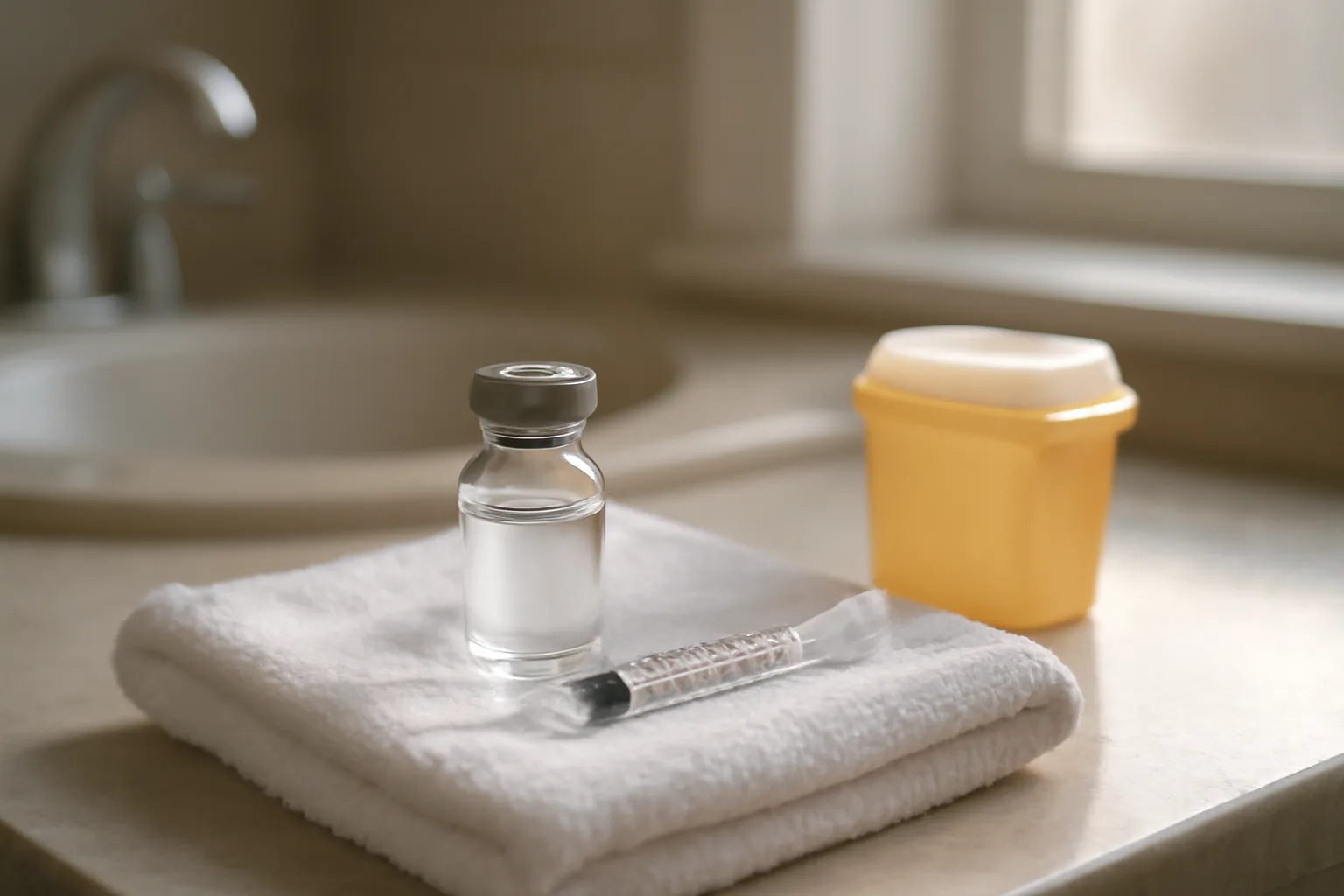
TL;DR
Ipamorelin is given as a subcutaneous injection, typically on an empty stomach and often at bedtime, because food blunts the growth hormone pulse and GH release naturally peaks during sleep. Human pharmacokinetic data show a short half-life of roughly 2 hours [1]. There's no FDA-approved standalone ipamorelin product; it's compounded, usually as part of a tesamorelin/ipamorelin blend, and dosing should be set by a prescriber.
What is ipamorelin and how does it work in the body?
Ipamorelin is a pentapeptide that mimics ghrelin and binds the growth hormone secretagogue receptor (GHS-R1a), triggering a pulse of growth hormone release from the pituitary. The 1998 paper that first characterized it in European Journal of Endocrinology described it as "the first selective growth hormone secretagogue," meaning it stimulates GH release without meaningfully raising cortisol, prolactin, or ACTH the way some earlier GH-releasing peptides did [1]. That selectivity is the whole reason ipamorelin got attention in the first place. Earlier ghrelin mimetics like GHRP-6 also nudge appetite hormones and stress hormones up, which isn't what most people want if the goal is a clean GH pulse. Ipamorelin's receptor binding and downstream signaling has been mapped in detail in structure-activity relationship work published in Drug Testing and Analysis, which describes how small changes to the peptide backbone change potency and receptor selectivity across this drug class [2]. None of this means ipamorelin is an approved medicine for muscle gain, fat loss, or anti-aging in humans. It isn't. The FDA-approved drug database, Drugs@FDA, does not list an ipamorelin product [3]. What exists in the US market is compounded ipamorelin, almost always paired with another peptide like tesamorelin or CJC-1295, prepared by a compounding pharmacy under a prescription.
How is ipamorelin actually administered?
In the research literature, ipamorelin has been given by subcutaneous injection and, in some pharmacokinetic studies, intranasally. A 1998 Xenobiotica paper specifically evaluated nasal absorption of ipamorelin and related peptidyl GH secretagogues, finding the peptide is absorbed nasally but with lower and more variable bioavailability than injection [4]. That's part of why nasal delivery never became the standard route; subcutaneous injection gives more predictable exposure. Subcutaneous means under the skin, not into muscle. Typical injection sites in clinical peptide use are the abdomen (avoiding a couple inches around the navel) or the outer thigh, rotating sites to reduce local irritation. The peptide is reconstituted from a lyophilized (freeze-dried) powder with bacteriostatic water before each course of use; correct reconstitution and storage matter a lot here, since ipamorelin degrades if mishandled. If you want the step-by-step mixing and storage process, see our guide on how to reconstitute CJC-1295 and ipamorelin. One practical note: because there's no standalone FDA-approved ipamorelin injection pen or vial, dose and volume depend entirely on how the compounding pharmacy formulated the specific vial you have. This is not a product you self-titrate off forum charts. The concentration on your vial's label from your dispensing pharmacy is what determines your injection volume, not a number you saw on a bodybuilding thread.
What time of day should you take ipamorelin?
Most protocols in clinical and research use call for injection at bedtime or first thing in the morning on an empty stomach, timed around the body's natural GH pulsatility. Growth hormone is released in pulses throughout the day, with the largest endogenous pulse tied to early slow-wave sleep, so dosing in the evening is meant to work with that rhythm rather than against it. A rat study on chronic ipamorelin treatment found effects on somatotroph (GH-producing pituitary cell) responsiveness that varied with the treatment schedule used, published in Histology and Histopathology [5]. That's animal data on dosing pattern and pituitary cell response, not a human timing protocol, but it does support the general idea that when and how often you dose changes the pituitary's response over time. Pharmacokinetic modeling in human volunteers found ipamorelin has a short elimination half-life, on the order of about 2 hours, with a dose-dependent GH response, published in Pharmaceutical Research in 1999 [6]. Because the drug clears quickly and works by producing a pulse rather than a sustained blood level, splitting timing around sleep and keeping the stomach empty are both about maximizing that single pulse, not about maintaining constant drug levels.
Should you take ipamorelin on an empty stomach?
Yes, this is the near-universal instruction in clinical peptide protocols, though it's worth being honest that the ipamorelin-specific human food-interaction data is thin. The rationale comes from general GH physiology: circulating glucose and certain amino acids blunt pituitary GH release, so a recent meal can dampen the GH pulse a secretagogue is trying to trigger. Most prescribers instruct patients to inject at least 20 to 30 minutes before eating, or on waking before breakfast, or right before bed a couple hours after the last meal. This isn't peptide-specific folklore borrowed from bodybuilding forums; it reflects well-established GH secretion physiology that predates ipamorelin by decades. What's forum lore, by contrast, is the idea that stacking specific carb-timing windows or fasted cardio around your shot meaningfully changes outcomes. There's no controlled human ipamorelin trial testing that.
What dose of ipamorelin do people actually use?
There is no FDA-approved dose because there is no FDA-approved ipamorelin product. Dosing seen in the research literature and in compounded clinical use varies by study design and by what's being targeted (GH pulse amplitude, bone effects, gut motility), and none of it maps directly onto a bodybuilding-forum "cycle." Human pharmacokinetic-pharmacodynamic modeling used a dose range to characterize the GH response curve and reported a clear dose-response relationship for GH release [6]. Separately, a randomized controlled proof-of-concept trial tested intravenous ipamorelin in bowel resection patients for postoperative ileus, an entirely different clinical use case than aesthetic or performance dosing, and reported findings on gut motility recovery rather than body composition [7]. These are not interchangeable protocols. A dose studied for post-surgical ileus in a hospital IV setting tells you nothing about what a subcutaneous 'anti-aging' dose should be. Because the actual number on your vial depends on the concentration your compounding pharmacy used, general dosing math and typical ranges reported in clinical literature are covered in more depth in our ipamorelin dosage guide, and if you're running it alongside CJC-1295, the CJC-1295/ipamorelin dosage calculator walks through the math for a specific vial concentration.
How long does ipamorelin stay in your system?
Short. Human PK/PD modeling from 1999 put ipamorelin's elimination half-life at roughly 2 hours after subcutaneous or intravenous dosing, with GH response tracking dose in a predictable pattern [6]. That short half-life is exactly why timing matters more than it would for a long-acting drug: you're chasing a single clean pulse, not a steady-state blood level. Metabolite studies back this up from a different angle. Analytical chemistry work mapping how growth hormone releasing peptides get broken down in the body found rapid metabolism to smaller fragments [8], and a Drug Testing and Analysis paper specifically traced ipamorelin metabolites in human urine after nasal dosing of several GHRPs including ipamorelin, useful primarily for antidoping detection windows rather than clinical dosing [9]. If you're an athlete subject to drug testing, that detection-window research matters more to you than any bodybuilding forum protocol.
Is ipamorelin legal to buy and use in the US?
Ipamorelin sits in a genuinely gray regulatory zone, and this is worth understanding clearly rather than glossing over. It is not FDA-approved as a drug for any indication; you won't find it in Drugs@FDA [3]. It's also not automatically legal to compound just because a pharmacy is willing to make it. Under federal law, compounding pharmacies operate under 21 U.S.C. 353a, which sets conditions for traditional (503A) pharmacy compounding, including that compounding generally must use bulk drug substances that appear on FDA's approved bulks lists or meet other narrow criteria [10]. The specific bulk substances allowed for 503A compounding are listed under 21 CFR 216.23 [11], and the parallel list for larger 503B outsourcing facilities is at 21 CFR 216.24 [12]. FDA separately maintains a running list of bulk substances nominated for compounding consideration [13], and a general explainer of how the 503A bulk substance framework works is on FDA's own compounding page [14]. What this means practically: legitimate compounded ipamorelin comes from a licensed pharmacy filling a valid prescription, tied to a provider's clinical judgment, not from a website selling "research chemicals" to anyone with a credit card. A 2018 analysis of black-market growth-promoting products published in Growth Hormone & IGF Research found that unregulated products sold outside legitimate pharmacy channels frequently didn't match their labeled contents [15]. That's a real, documented risk with unregulated peptide sourcing, and it's a big reason to only ever obtain compounded ipamorelin through a provider-reviewed pathway with a named, accountable pharmacy, not a mystery vial from an offshore seller.
What has ipamorelin actually been studied for?
This is where it's important to separate real evidence from forum lore. Most of the controlled human evidence on ipamorelin comes from a narrow set of contexts, not from bodybuilding-style body recomposition trials. Postoperative gut motility is the best-studied clinical application. A randomized, controlled proof-of-concept study in bowel resection patients found ipamorelin's ghrelin-mimetic action was tested for reducing postoperative ileus [7], building on earlier rodent work showing ipamorelin improved gastric dysmotility in a postoperative ileus model [16] and reduced ileus severity in another rodent model published in the Journal of Pharmacology and Experimental Therapeutics [17]. Bone metabolism is the other area with decent animal data. Ipamorelin induced longitudinal bone growth in young rats [18], increased bone mineral content in adult female rats when combined with GHRP-6 [19], and counteracted glucocorticoid-induced loss of bone formation in adult rats [20]. These are rat studies, not human osteoporosis trials, but they're a more solid evidence base than most of what circulates online about ipamorelin and bone. A 2024 study in Physiology & Behavior found that ipamorelin, along with the related compound anamorelin, inhibited cisplatin-induced weight loss in ferrets, an animal model used for chemotherapy-associated wasting [21]. Broader reviews, including a 2020 Translational Andrology and Urology paper on GH secretagogues in hypogonadal men's body composition [22], and 2026 reviews in Journal of the American Academy of Orthopaedic Surgeons Global Research & Reviews [23], American Journal of Sports Medicine [24], and Sports Medicine [25], frame peptide therapies including ipamorelin as an emerging but still largely unapproved area in orthopedic and sports medicine, with real gaps between preclinical promise and confirmed human clinical outcomes. None of these establish ipamorelin as proven for muscle building or fat loss in healthy adults; that use case remains almost entirely anecdotal.
What about pain, appetite, and metabolic effects?
A few other mechanisms show up in the ipamorelin literature that are worth knowing, mostly because they explain side effects people report rather than because they're proven benefits. Ghrelin mimetics broadly, including ipamorelin, have been studied for effects on visceral and somatic pain signaling. A 2020 Journal of Experimental Pharmacology paper found ghrelin mimetics attenuated visceral and somatic nociception in animal pain models [26], a mechanistic finding, not a clinical pain-treatment recommendation. On the metabolic side, a 2004 Neuroendocrinology Letters paper described a mechanism by which ipamorelin evokes insulin release from the pancreas in normal and diabetic rats [27], and separate research found GH secretagogues stimulate adiposity (fat tissue changes) through a GH-independent pathway in some models [28]. There's also older work on nitrogen balance and urea synthesis with GH secretagogue treatment in steroid-treated rats, relevant to muscle-sparing claims but again animal-only [29]. Put together, these findings explain some of the reported appetite and glucose-related effects people notice, but they don't add up to a green light for using ipamorelin to manage blood sugar or appetite outside a prescriber's supervision. If you want a full rundown of documented and theoretical side effects, that's covered separately in ipamorelin side effects.
How does ipamorelin compare to CJC-1295 and why are they combined?
Ipamorelin and CJC-1295 work on different receptors and get combined precisely because of that difference, not because bodybuilding culture decided two peptides are better than one. Ipamorelin is a ghrelin mimetic acting on GHS-R1a. CJC-1295 is a growth hormone releasing hormone (GHRH) analog acting on the separate GHRH receptor. Together they're meant to amplify a GH pulse through two distinct mechanisms rather than one. Here's a comparison of what's actually documented for each, versus common claims:
| Feature | Ipamorelin | CJC-1295 | ||||
|---|---|---|---|---|---|---|
| Receptor target | GHS-R1a (ghrelin receptor) [1] | GHRH receptor | ||||
| Human half-life | ~2 hours [6] | Longer, depends on formulation (DAC vs. no-DAC) | ||||
| Best-documented human use | Postoperative ileus (RCT) [7] | Not covered in this source pack | ||||
| Animal-data areas | Bone formation, bone mineral content [18][19][20] | Not covered in this source pack | FDA-approved product | None [3] | None | |
| Typical real-world form | Compounded, often blended with tesamorelin | Compounded, often blended with ipamorelin | If your interest is specifically in dosing math when running both together, the CJC-1295/ipamorelin dosage calculator is built for that math, not for medical advice on whether to combine them, which should come from your prescriber. |
Does ipamorelin come as a standalone product you can buy?
No, and this is a point worth being direct about. There is no FDA-approved standalone ipamorelin injection, and in the current US compounding landscape, ipamorelin is typically dispensed as part of a tesamorelin/ipamorelin blend prepared by a licensed compounding pharmacy under a valid prescription, not sold as a solo SKU. That matters for how you think about sourcing. A legitimate path runs through a provider who evaluates your history and labs, writes a prescription, and sends it to an accountable, named compounding pharmacy that operates under the 503A/503B bulk substance framework described above [10][11][12]. An illegitimate path is a website selling unlabeled "research peptides" with no prescriber involved, which is exactly the category where the 2018 black-market analysis found mislabeled and inconsistent products [15]. If you're trying to figure out what a defensible sourcing path actually looks like, our buy ipamorelin guide walks through what to check before you commit to a provider or pharmacy. Ipamorelin Co works within that provider-reviewed model, connecting people to prescriber evaluation and a named compounding pharmacy partner that dispenses the tesamorelin/ipamorelin blend, rather than shipping peptide vials directly to consumers with no clinical oversight.
How do you know if ipamorelin is working?
Realistically, there's no simple home test that confirms an individual GH pulse is doing what you hope it's doing. In clinical and research contexts, effects get measured through blood markers like IGF-1 levels, body composition changes over months (not days), and in specific rodent studies, direct measures like bone mineral content [19] or gut transit time [16][17]. For a person using compounded ipamorelin under medical supervision, the realistic feedback loop is periodic bloodwork your prescriber orders (IGF-1, metabolic panel) plus tracked body composition over 8 to 12 weeks, not day-to-day subjective feel. Anyone promising you'll "feel it working" within days is selling a story the pharmacology doesn't really support, given the short half-life and pulsatile mechanism involved [6].
Frequently asked questions
How do you inject ipamorelin correctly?
Ipamorelin is given by subcutaneous injection, typically into the abdomen or outer thigh with sites rotated between doses. It's reconstituted from lyophilized powder with bacteriostatic water before use. Exact volume depends on your specific vial's concentration, set by the compounding pharmacy that filled your prescription, so follow the label and your provider's instructions rather than a generic online chart.
What time of day is best to take ipamorelin?
Most protocols call for bedtime or early-morning dosing on an empty stomach, timed to work with the body's natural nighttime GH pulse. This isn't specific to ipamorelin studies alone; it follows general GH physiology, since food and glucose blunt pituitary GH release. There's no controlled human trial ranking exact injection times against each other.
Should ipamorelin be taken with or without food?
Without food. The near-universal instruction is to inject on an empty stomach, typically 20 to 30 minutes before eating or right before bed. This is based on established GH secretion physiology (glucose and some amino acids suppress GH release), not on an ipamorelin-specific feeding trial.
How long does it take for ipamorelin to work?
A single dose produces a GH pulse within a couple of hours, given ipamorelin's short roughly 2-hour human half-life [6]. But meaningful physiological changes like body composition shifts or bone effects seen in animal studies take weeks to months of consistent dosing, tracked through bloodwork and body measurements, not felt day to day.
Can you buy ipamorelin by itself, without other peptides?
In practice, no. There's no FDA-approved standalone ipamorelin product, and it's typically dispensed by compounding pharmacies as part of a tesamorelin/ipamorelin blend under prescription, not sold alone. Claims of a pure standalone ipamorelin SKU from an online seller are a red flag for an unregulated source.
Is ipamorelin legal in the United States?
It's not FDA-approved for any use, but it can be legally compounded by a pharmacy under 21 U.S.C. 353a if the bulk substance and process meet FDA's 503A or 503B bulk drug substance rules [10][11][12]. Legitimate use requires a valid prescription from a provider and a licensed compounding pharmacy, not a direct-to-consumer research-chemical sale.
What is ipamorelin's half-life in the body?
Human pharmacokinetic-pharmacodynamic modeling from 1999 found ipamorelin has an elimination half-life of roughly 2 hours, with GH release tracking dose in a predictable way [6]. That short half-life is why timing around sleep and fasting state matters more than it would for a longer-acting drug.
Why is ipamorelin combined with CJC-1295?
Ipamorelin acts on the ghrelin receptor (GHS-R1a); CJC-1295 acts on the separate GHRH receptor. Combining agents with two different mechanisms is meant to amplify a single GH pulse rather than duplicate one signal. Compounded blends pairing the two are common in current practice, though controlled human trials specifically testing the combination are limited.
Does ipamorelin have proven effects on muscle or fat loss in humans?
Not in controlled human trials. Ipamorelin's best human evidence is in postoperative gut motility (a randomized controlled trial in bowel resection patients) [7]. Muscle and fat-related claims mostly come from animal studies on bone, nitrogen balance, and adiposity mechanisms [18][19][20][28][29], not confirmed human body-composition trials.
What are the documented side effects of ipamorelin?
Human controlled-trial safety data is limited mostly to the postoperative ileus study population [7]. Mechanistic research points to possible effects on insulin release [27] and adiposity pathways [28]. For a fuller rundown of reported and theoretical effects, see our dedicated ipamorelin side effects guide.
Can ipamorelin be taken nasally instead of injected?
Research from 1998 evaluated nasal absorption of ipamorelin and found it is absorbed through the nasal route, but with lower and more variable bioavailability than subcutaneous injection [4]. That's part of why injection, not a nasal spray, remains the standard route in current compounded use.
How is ipamorelin dosage typically measured?
Dose depends entirely on the concentration of the specific compounded vial your pharmacy prepared; there's no standardized commercial dose because there's no FDA-approved product. Human research used dose ranges to build dose-response curves for GH release [6], but real-world dosing should be set by your prescriber based on your vial and clinical goals.
Is there a difference between research-grade and pharmacy-compounded ipamorelin?
Yes, and it matters. A 2018 analysis of black-market growth-promoting products found unregulated products often didn't match their labeled contents [15]. Pharmacy-compounded product tied to a prescription and dispensed under 503A/503B rules [10][11][12] has accountability and quality controls that unregulated "research chemical" sellers don't.
Sources
- European Journal of Endocrinology, 1998 (PMID 9849822): Ipamorelin was characterized as the first selective growth hormone secretagogue, stimulating GH release without significantly raising cortisol, prolactin, or ACTH.
- Drug Testing and Analysis, 2017 (PMID 26811125): Structure-activity relationship research maps how peptide backbone changes affect potency and receptor selectivity in growth hormone secretagogues.
- Drugs@FDA, FDA-approved drug products database: There is no FDA-approved ipamorelin drug product listed in the FDA's approved drug database.
- Xenobiotica, 1998 (PMID 9879640): Ipamorelin and related peptidyl GH secretagogues were evaluated for nasal absorption, showing lower and more variable bioavailability than injection.
- Histology and Histopathology, 2002 (PMID 12168778): Chronic ipamorelin treatment in young female rats altered somatotroph (pituitary GH cell) responsiveness depending on treatment schedule.
- Pharmaceutical Research, 1999 (PMID 10496658): Human PK/PD modeling found ipamorelin has an elimination half-life of roughly 2 hours with a dose-dependent GH response.
- International Journal of Colorectal Disease, 2014 (PMID 25331030): A randomized, controlled proof-of-concept trial tested the ghrelin mimetic ipamorelin for managing postoperative ileus in bowel resection patients.
- Analytical Chemistry, 2012 (PMID 23101768): Metabolism studies of growth hormone releasing peptides show rapid breakdown into smaller fragments.
- Drug Testing and Analysis, 2015 (PMID 25869809): Ipamorelin metabolites were traced in human urine after nasal administration, relevant to antidoping detection windows.
- 21 U.S.C. 353a, pharmacy compounding: Federal law sets conditions under which traditional (503A) pharmacy compounding is permitted, including bulk substance requirements.
- 21 CFR 216.23, the final 503A Bulks List: This regulation lists the bulk drug substances approved for use in 503A pharmacy compounding.
- 21 CFR 216.24, the 503B Bulks List: This regulation lists the bulk drug substances approved for use by 503B outsourcing facilities.
- FDA, bulk drug substances nominated for use in compounding: FDA maintains a running list of bulk drug substances nominated for consideration in compounding.
- FDA, bulk drug substances used in compounding under section 503A: FDA explains the framework governing which bulk drug substances may be used under 503A compounding.
- Growth Hormone & IGF Research, 2018 (PMID 29864719): Analysis of black-market growth-promoting products found unregulated products frequently did not match their labeled contents.
- Journal of Experimental Pharmacology, 2012 (PMID 27186127): Ipamorelin improved gastric dysmotility in a rodent model of postoperative ileus.
- Journal of Pharmacology and Experimental Therapeutics, 2009 (PMID 19289567): Ipamorelin reduced ileus severity in a rodent model of postoperative ileus.
- Growth Hormone & IGF Research, 1999 (PMID 10373343): Ipamorelin induced longitudinal bone growth in rats.
- Journal of Endocrinology, 2000 (PMID 10828840): Ipamorelin combined with GHRP-6 increased bone mineral content in adult female rats.
- Growth Hormone & IGF Research, 2001 (PMID 11735244): Ipamorelin counteracted glucocorticoid-induced decreases in bone formation in adult rats.
- Physiology & Behavior, 2024 (PMID 39043357): Ipamorelin and anamorelin inhibited cisplatin-induced weight loss in a ferret model of chemotherapy-associated wasting.
- Translational Andrology and Urology, 2020 (PMID 32257855): Growth hormone secretagogues are discussed as a strategy in managing body composition in hypogonadal males.
- Journal of the American Academy of Orthopaedic Surgeons Global Research & Reviews, 2026 (PMID 41490200): A 2026 review discusses applications, challenges, and future directions of therapeutic peptides in orthopaedics.
- American Journal of Sports Medicine, 2026 (PMID 41476424): A 2026 primer for orthopaedic and sports medicine physicians reviews injectable peptide therapy including growth hormone secretagogues.
- Sports Medicine, 2026 (PMID 41966639): A 2026 review evaluates safety and efficacy of approved and unapproved peptide therapies for musculoskeletal injuries and athletic performance.
- Journal of Experimental Pharmacology, 2020 (PMID 32801950): Ghrelin mimetics were found to attenuate visceral and somatic nociception in animal pain models.
- Neuro Endocrinology Letters, 2004 (PMID 15665799): Research described a mechanism by which ipamorelin evokes insulin release from the pancreas in normal and diabetic rats.
- Biochemical and Biophysical Research Communications, 2001 (PMID 11162489): Growth hormone secretagogues were found to stimulate adiposity through a GH-independent mechanism in animal models.
- Growth Hormone & IGF Research, 2009 (PMID 19231263): Growth hormone and GH secretagogue treatment affected nitrogen balance and urea synthesis in steroid-treated rats.